Golden Suites Italy
Mantua in a day: from the Ducal Palace to Palazzo Te
At a glance
- Duration: a full day, with 5–6 hours of sightseeing
- Route: about 5 km on foot, all flat
- Tickets: Ducal Palace with the Camera degli Sposi €18, Palazzo Te €18
- To book: entry to the Ducal Palace with the Camera degli Sposi, especially at weekends
- Good to know: on Mondays the Ducal Palace is closed, Palazzo Te is open
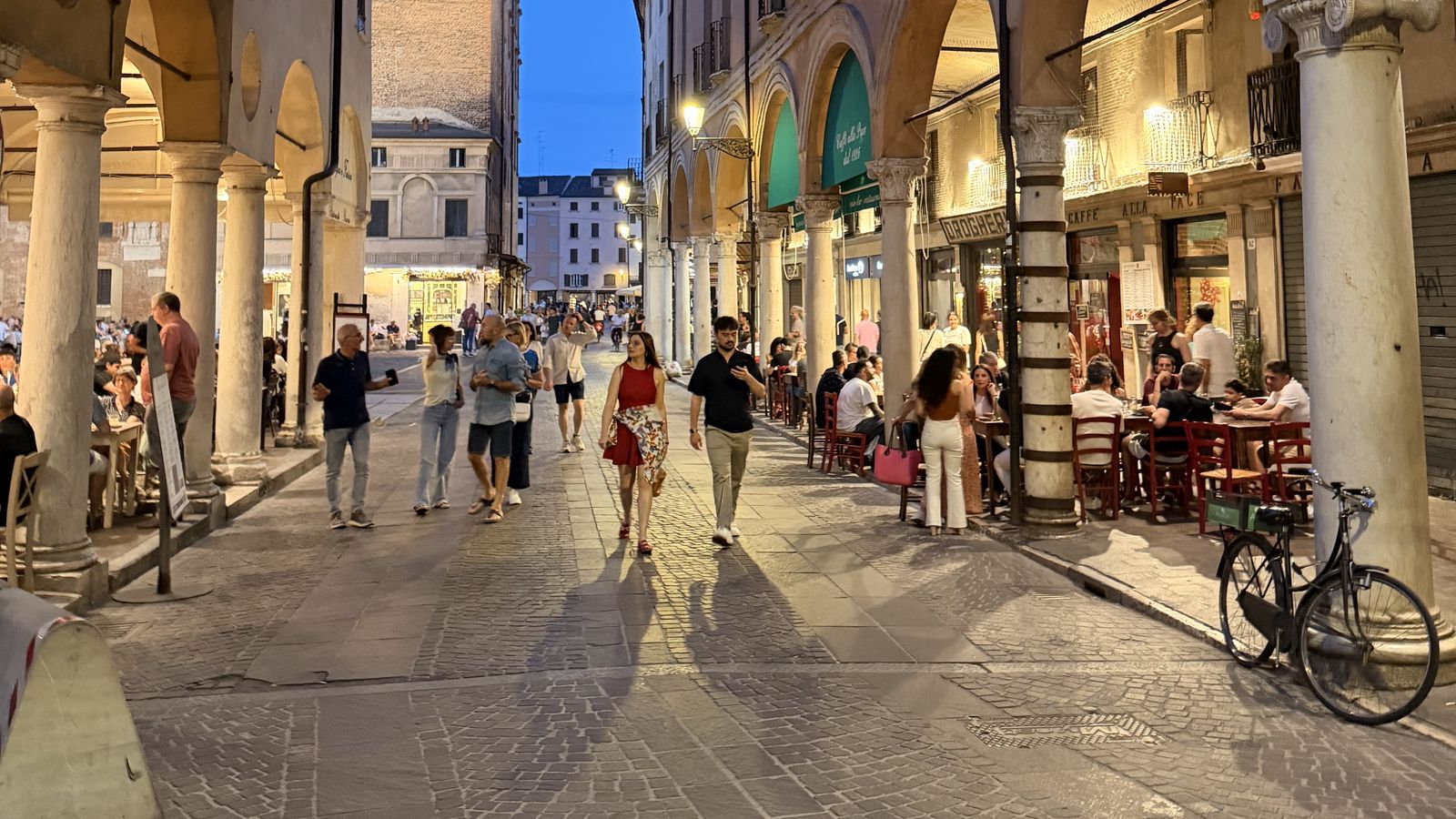
Mantua is a city to see on foot: the historic centre is flat, compact and surrounded on three sides by lakes. In a day, with good planning, you can see the two Gonzaga masterpieces, the Ducal Palace with the Camera degli Sposi (Bridal Chamber) and Palazzo Te, plus the squares and churches of the centre.
Morning: Piazza Sordello and the Ducal Palace
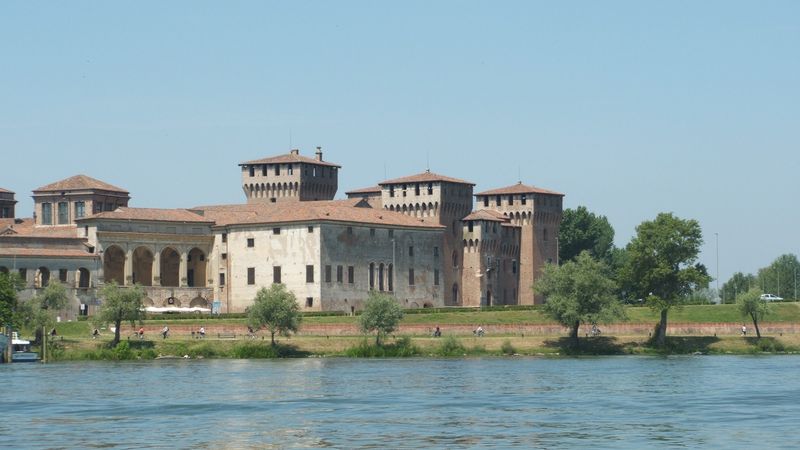
Start early at Piazza Sordello, the great square overlooked by the crenellated façade of the Ducal Palace and the Duomo. The Ducal Palace opens at 8.15am: it is the palace of the Gonzaga, who ruled Mantua from 1328 to 1707, a city within a city made of palaces, courtyards and gardens built over three centuries.
The most eagerly awaited moment is the Camera degli Sposi, in San Giorgio Castle, painted by Andrea Mantegna between 1465 and 1474: the walls depict the court of Ludovico Gonzaga and at the centre of the ceiling a trompe-l'oeil oculus opens onto the sky, with figures looking down at visitors. The tour starts in the castle and continues through the Corte Nuova and the Corte Vecchia.
The full ticket, including the Bridal Chamber, costs €18; without San Giorgio Castle, €11. Under-18s go in free, and on the first Sunday of the month admission is free for everyone. All the details are in the guide to the Ducal Palace and Camera degli Sposi.
Piazza Broletto, Piazza delle Erbe, the Basilica of Sant'Andrea and the Teatro Bibiena
Leaving Piazza Sordello, in a few steps you reach Piazza Broletto, with the Palazzo del Podestà, home to the Museo Virgilio, dedicated to the Latin poet born in Andes, a village near the ancient city of Mantua, today's Mantova.
Just beyond it lies Piazza delle Erbe, the market square: here are the Rotonda di San Lorenzo, the oldest church in the city, built in 1082 at the wish of Matilda of Canossa, the Palazzo della Ragione and the Torre dell'Orologio (Clock Tower), with its astronomical clock of 1473 showing the hours, the phases of the moon and the signs of the zodiac.
Next to Piazza delle Erbe is the Basilica of Sant'Andrea, designed by Leon Battista Alberti, with a façade modelled on the Roman triumphal arch. It holds the Sacred Vessels with the relic of the Blood of Christ and the chapel where Andrea Mantegna is buried.
A short way off, on via Accademia, step inside the Teatro Bibiena, an eighteenth-century theatre with a bell-shaped auditorium: it opened in 1769 and a few weeks later, in January 1770, a Mozart not yet fourteen performed there. The theatre is closed on Mondays and during events.
It is the right moment for lunch: for pumpkin tortelli and Mantuan cooking, read our guide: Where to eat in Mantua.
Afternoon: Palazzo Te
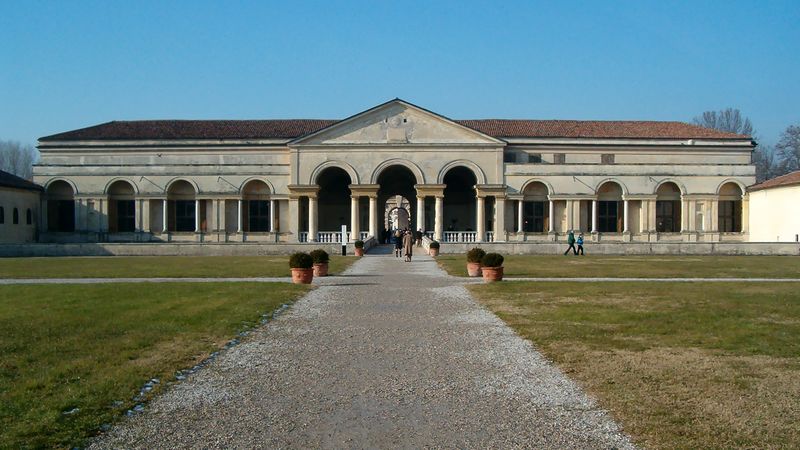
From the centre, a walk of about twenty minutes south leads to Palazzo Te, the villa that Giulio Romano built and decorated for Federico II Gonzaga in the first half of the sixteenth century. The most famous room is the Sala dei Giganti (Hall of the Giants), where the walls and ceiling form a single scene that seems to collapse on the visitors. On the way you pass the Casa del Mantegna, designed by the painter with a circular courtyard inside a square plan.
Palazzo Te is open until 7pm, with the last ticket at 6pm (on Tuesdays it opens at 1pm). The ticket costs €18 and also includes the Museo MACA in Palazzo San Sebastiano and the Tempio di San Sebastiano by Leon Battista Alberti. Read the guide to Palazzo Te.
At sunset: Mantua seen from the lake
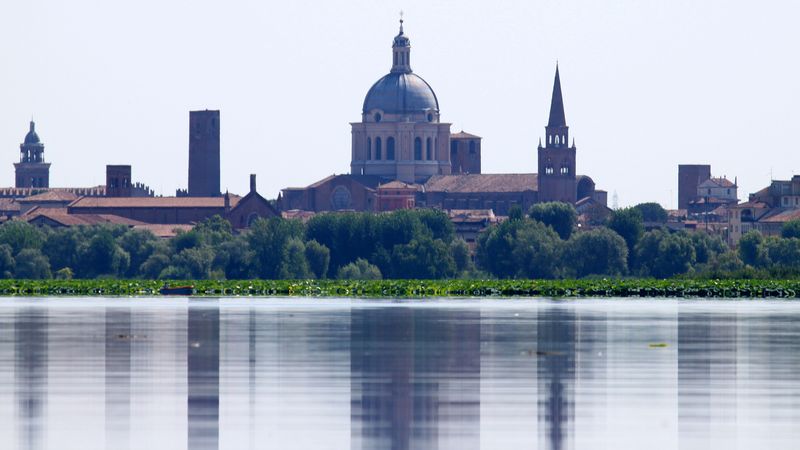
End the day on the San Giorgio Bridge or on the Lungolago dei Gonzaga: from here the city's skyline, with the dome of Sant'Andrea and San Giorgio Castle, is mirrored in the water. It is the most famous view of Mantua. If you still have energy, beyond the bridge is Campo Canoa, the meadow from which the whole skyline can be seen.
If you only have half a day
Choose between the two palaces. The classic is the Ducal Palace with the Bridal Chamber, followed by Piazza delle Erbe, the Rotonda di San Lorenzo and Sant'Andrea, and sunset on the San Giorgio Bridge: that is four hours and about two kilometres on foot.
Practical tips
- On Mondays the Ducal Palace is closed, while Palazzo Te is open from 9am to 7pm: if you arrive on a Monday, reverse the itinerary.
- Mantua and Sabbioneta Card: €48 for 72 hours, with one entry to the Ducal Palace, Palazzo Te, Palazzo d'Arco, Teatro Bibiena, Torre dell'Orologio and other sites, including Sabbioneta. It is worth it if you are staying several days.
- By car: the centre is a restricted traffic zone. Leave the car in the car parks around the historic centre and get around on foot; if you are staying with us, the home's manager will point you to the most convenient option.
- In summer: avoid the squares during the hottest hours; the route through Palazzo Te is almost entirely air-conditioned.
If you have a second day, add the lakes circuit, a boat trip on the Mincio or a day trip to Sabbioneta.
Frequently asked questions
Can you visit Mantua in one day?
Yes, if you start early. The Ducal Palace with the Bridal Chamber in the morning, then on to Piazza delle Erbe and Sant'Andrea, Palazzo Te in the afternoon and the view from the San Giorgio Bridge at sunset. It is about 5 km on foot.
Do you need to book the Camera degli Sposi?
It is not compulsory, but it is recommended at weekends, on long holiday weekends and on the first Sunday of the month: the time you book is the entry time to San Giorgio Castle, where the Camera is and where the tour of the Ducal Palace begins.
Which is better, the Ducal Palace or Palazzo Te?
If you only have time for one, the Ducal Palace with Mantegna's Camera degli Sposi. Palazzo Te, with the Sala dei Giganti, comes second in importance and is open on Mondays too.
What to see in Mantua on a Monday?
The Ducal Palace is closed, but Palazzo Te is open 9am–7pm. You can still visit the squares, Sant'Andrea, the Rotonda di San Lorenzo and the lakefront.
Sources and further reading
Information checked against the official websites on 22 October 2026: